
The Ririe-Woodbury Dance Company opened their season with a split bill concert featuring choreography solely by New York City-based choreographers.
Smile Pretty began the evening, choreographed by Dual Rivet, a duo comprised of Jess Smith and Chelsea Ainsworth. The dancers navigated the space with an old time-y camera reminiscent of the late 1800s. Immediately, I felt the power of the camera in the performance space.
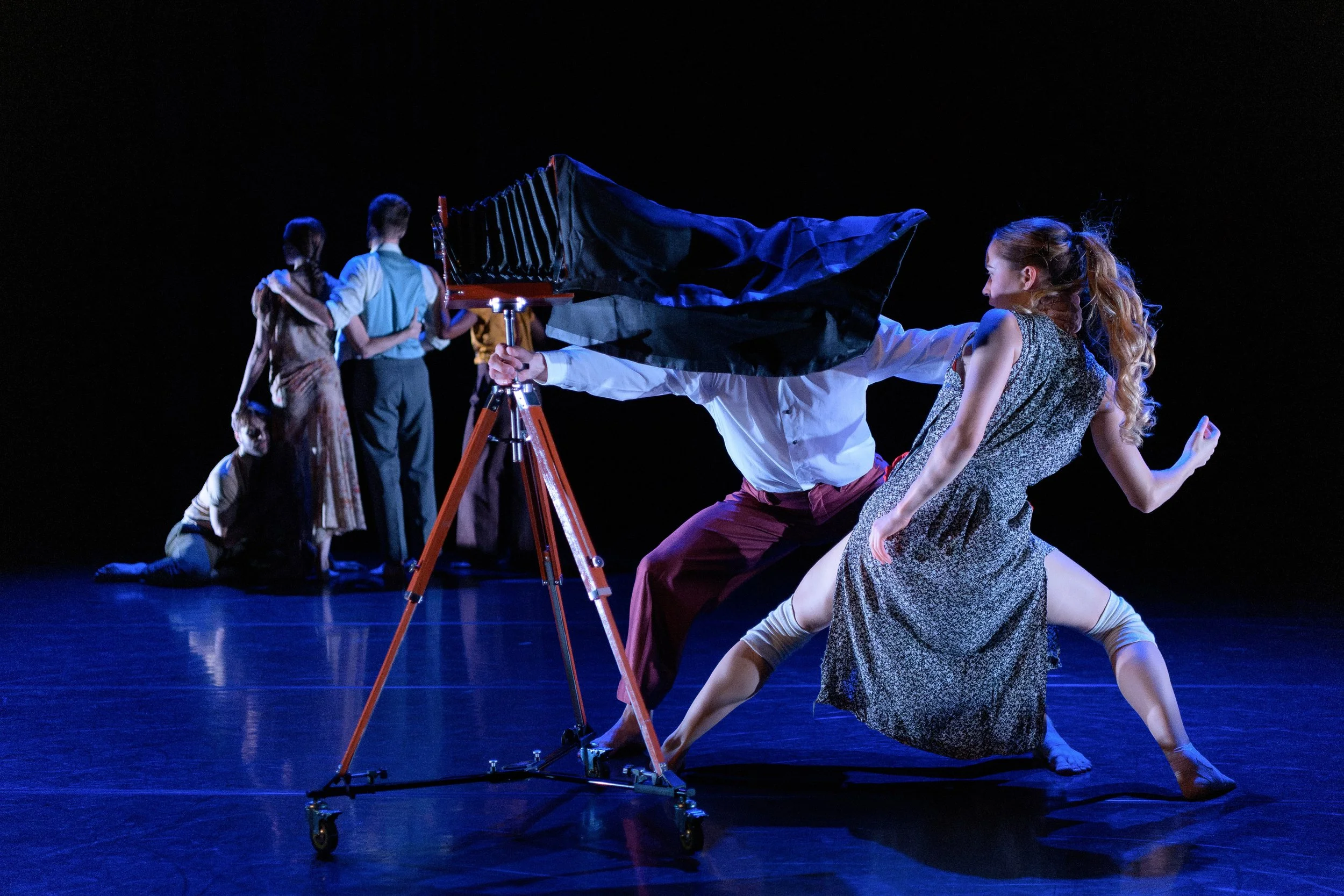
Photo provided by Ririe Woodbury
With the camera pointed towards a singular dancer, the collective would melt into another world juxtaposed by a chaotic solo. This choreographic decision combined with the classic and old-fashioned costuming created an eerie feeling. I found myself wondering what is this universe. It felt familiar, yet not. It felt like maybe I have felt this before… or perhaps maybe even lived it.
I observed Dual Rivet’s signature movement style in large, sweeping sequences where dancers moved in and out of the floor and partnered work. There was a careful balance of small, tender moments and dance-heavy phrasing. I appreciated Smith and Ainsworth’s commitment to their personal movement aesthetic, their choreographic eye that honors the message.
As the work progressed, I felt the navigation in snapshots of struggle. The dancers' performance asked me to question reality, the truth behind a photograph. The best part? I walked away with more questions than answers, which is my personal favorite way to exit a performance.
What backstories lie behind a captured moment?
Who are these people really within the frame, at their core?
What does the camera do to us?
Kayla Farrish’s Evermore closed the evening.
I was enamored by the commitment of the dancers. They gave their full physical, emotional, and theatrical selves to the work. This demonstrated to me a positive working relationship with Farrish. Something magical must have happened in the studio and in this creative process.
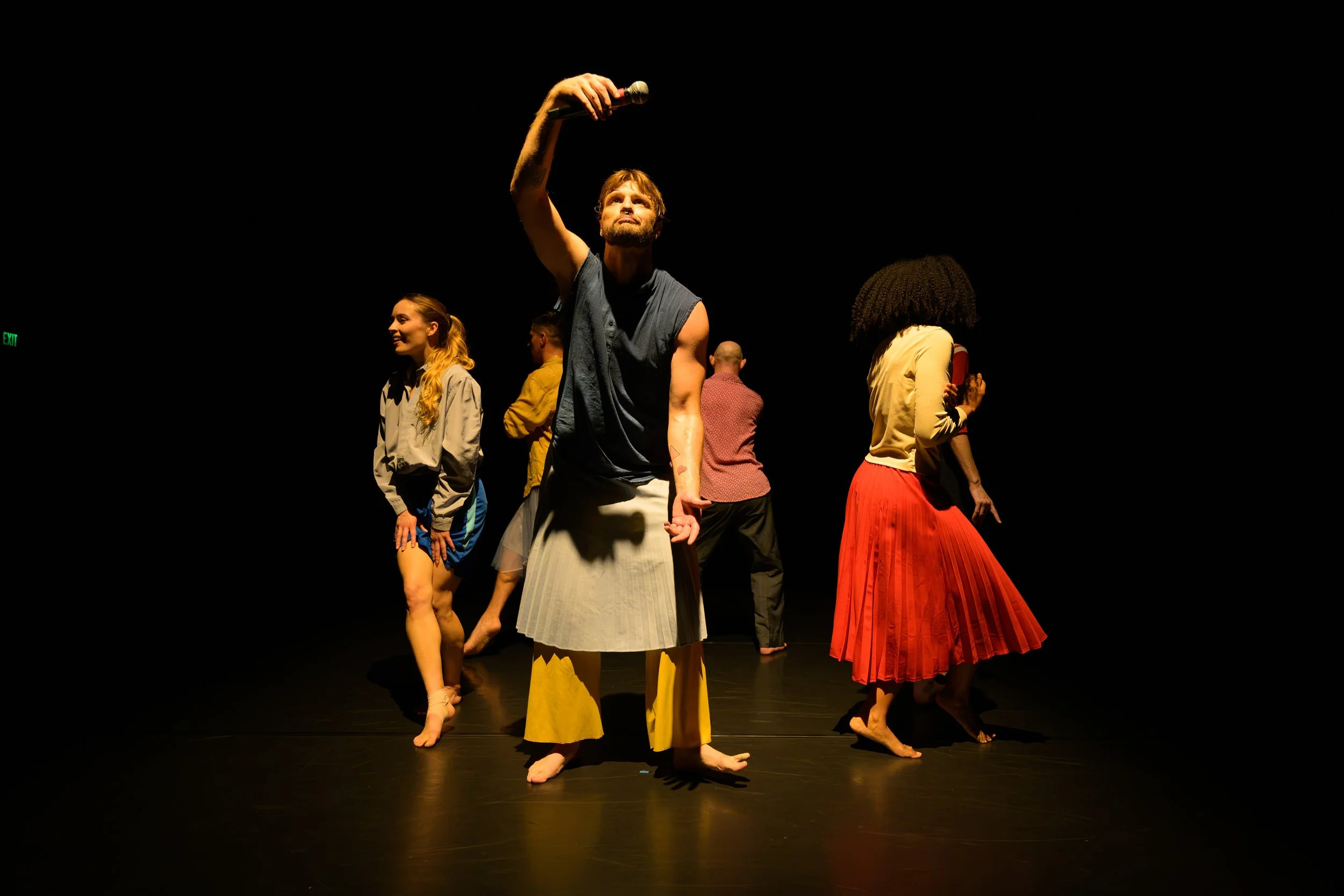
Photo provided by Ririe Woodbury
There was a clear relationship between the score and the evolution of the work. The two moved in tandem with one another with transitional moments between sections of the work interstitially woven together. They were seamless. I could feel myself adrift within the work, letting go of any desire for control as an audience member. Nothing else outside of Evermore mattered.
Learning about Farrish’s collaborative relationship with the composer, Alex MacKinnon, helped me to understand why I felt the choreography and score together were such a success. The music was created in tandem to the choreography, in the studio, with the dancers. This was truly evident.
Evermore also felt deeply human. I saw myself within it. The dancers’ various facial and upper body expressions remind me of how I journey through my day and process, or even demonstrate, emotions. I was reminded of my humanity when the dancers sang rather poorly but with much enthusiasm facing away from the audience. This earnest moment seemed to say “this is something I do alone with no one watching.”
I settled on understanding Evermore as an exploration of discovery and wondering. The broad spectrum of sections presented me with opportunities to experience an equally broad spectrum of emotions. Evermore seemed to defy certainty, never a final ending, resolution, or singular experience.
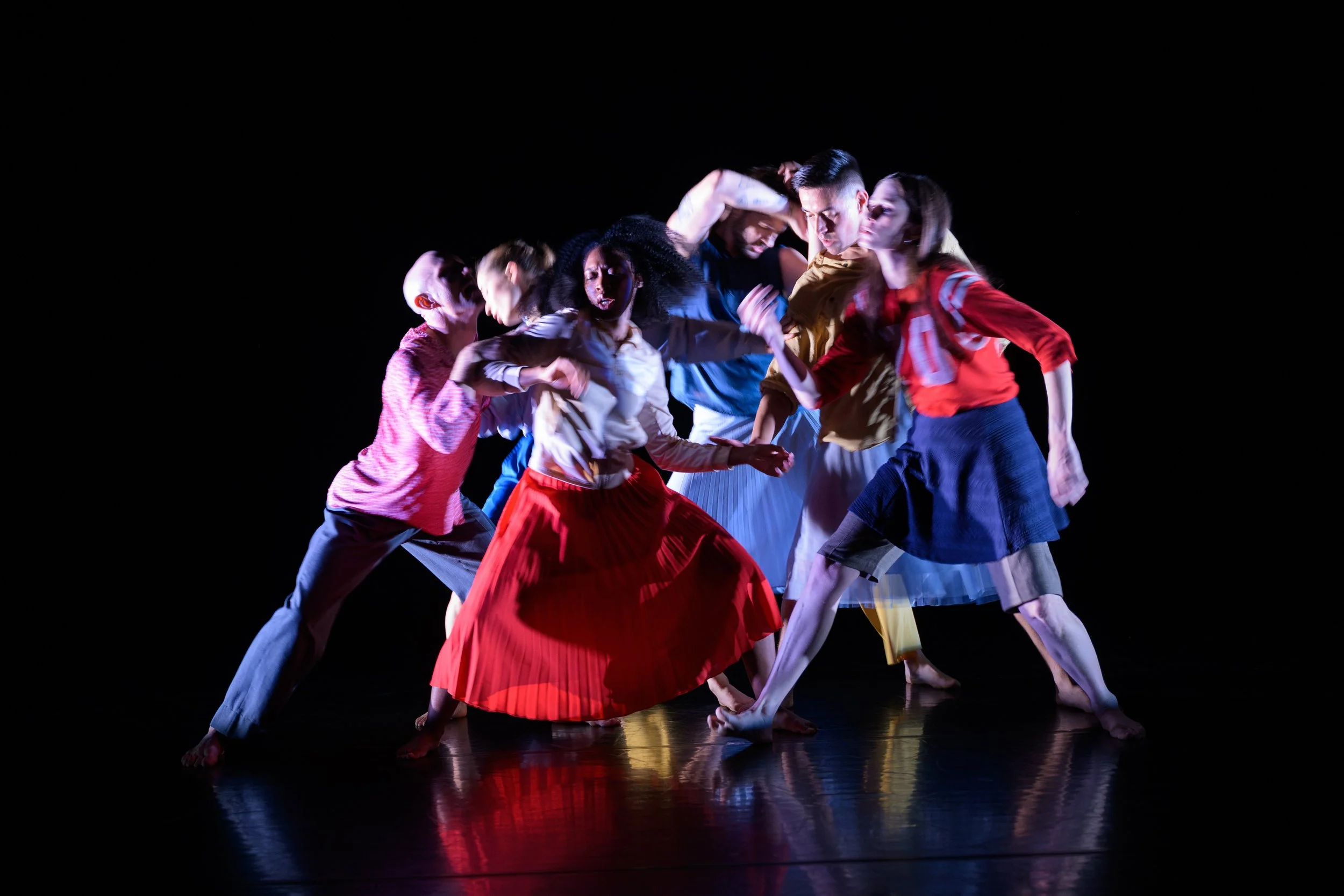
Photo provided by Ririe Woodbury
Kara Robertson is a Choreographer, Director, and Writer based in Salt Lake City. She holds an MFA in Modern Dance from the University of Utah. She founded and served as Artistic Director of Karar Dance Company, a 501(c)3 nonprofit professional contemporary dance company, for seven years. She is a 2024 Virginia Commission for the Arts Choreographic Fellow. Her work has been performed throughout the country including at the John F. Kennedy Center for the Performing Arts and at the Ailey Citigroup Theater and Gibney Dance. Kara holds a Bachelor of Fine Arts in Dance and Choreography from Virginia Commonwealth University. Kara Robertson is a Choreographer, Director, and Writer based in Salt Lake City. She holds an MFA in Modern Dance from the University of Utah. She founded and served as Artistic Director of Karar Dance Company, a 501(c)3 nonprofit professional contemporary dance company, for seven years. She is a 2024 Virginia Commission for the Arts Choreographic Fellow. Her work has been performed throughout the country including at the John F. Kennedy Center for the Performing Arts and at the Ailey Citigroup Theater and Gibney Dance. Kara holds a Bachelor of Fine Arts in Dance and Choreography from Virginia Commonwealth University. When not in the studio or attending performances, you will find Kara working in development, raising funds for programs at the Marriott Library at the University of Utah. Find her at kararchoreo.com and on Instagram @kararchoreo. Find her at kararchoreo.com and on Instagram @kararchoreo.