
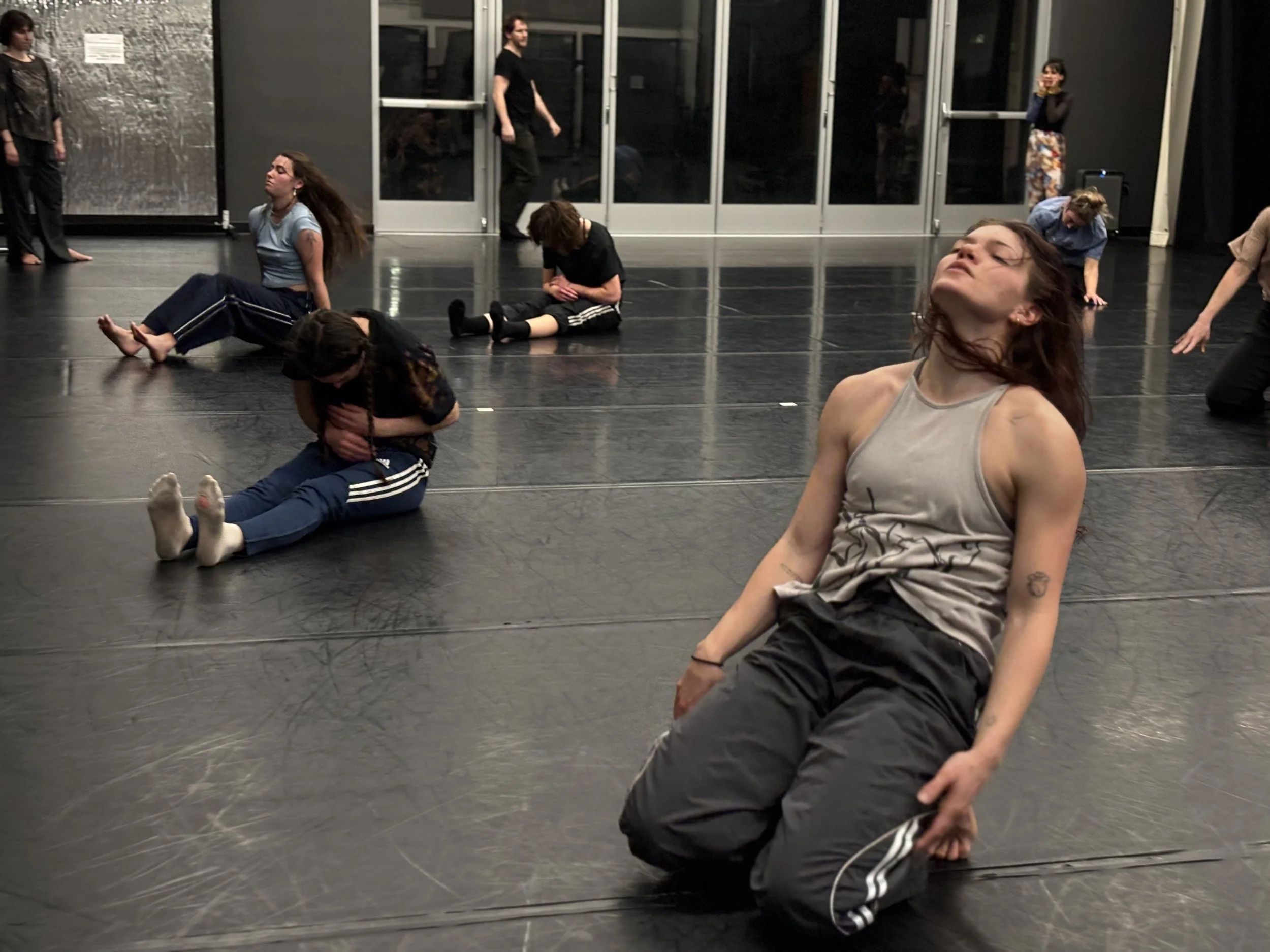
I took my first class with Dance Class For Humans in the summer of 2023 and was instantly hooked into the atmosphere of play, curiosity, and rigor. Sam Stone had just finished building the foundation of what would become DCFH for her MFA thesis at the University of Utah and this project was gaining new legs at Westminster University under a collaboration with Deseret Experimental Opera.
The color for season one was neon pink.
Some priorities were already clear – teachers should be paid a competitive wage for their work, the community should decide who teaches, and admission should be donation-based with no one turned away for lack of funds. Classes would offer challenging but approachable contemporary technique to support the multi-generational community of freelancers and teachers in Salt Lake City with few other options to continue their dance training beyond college.
The color for season two was electric green.
By fall they had $1,000 from a Salt Lake City Arts Council Project Grant for the next year of classes to theoretically cover the labor of 30 teachers, 30 hosts, and a rag tag team of organizers who were figuring things out as they went. Everyone but the teachers worked in exchange for free dance class.
The color for season three was bright teal.
Not only was DCFH a place for me to take class as a professional, but as I participated, I evolved into a teacher. I taught my first classes for DCFH in the spring of 2024, it was my first time teaching professional dancers and I relished the challenge. I ended up staying after class one day to talk with Sam and Meagan Bertselsen about what we needed to keep this thing going. They needed help writing grants – that was something I could do. I officially gained the title of Grant Goddess, no salary, no benefits, but I got to help sustain something that sustained me. So, I started writing.
The color for season four was magenta.
Every artist knows this challenge: there is never enough money to pay everyone a livable wage for the labor that the work asks of us. The challenges that DCFH faced were not unique in this respect. Grants will always give you less than you ask for, even when you are asking for the bare minimum. If you set a price for admission that would cover the real costs, it would be too high for anyone in the community to attend. And yet, in order for the work to continue, it has to be sustainable for the people who are organizing it. DCFH was growing and we were all negotiating if this was worth the effort.
How do we make sure we don’t burn out?
Why are we doing this if it isn’t making anyone any money?
How do we balance this with the demands of work that does financially support us?
How do we respond to concerns raised by the community?
How do we best meet the interests and desires of our community?
How do we expand our community – is that worth the work?
How do we take care of each other while we do this?
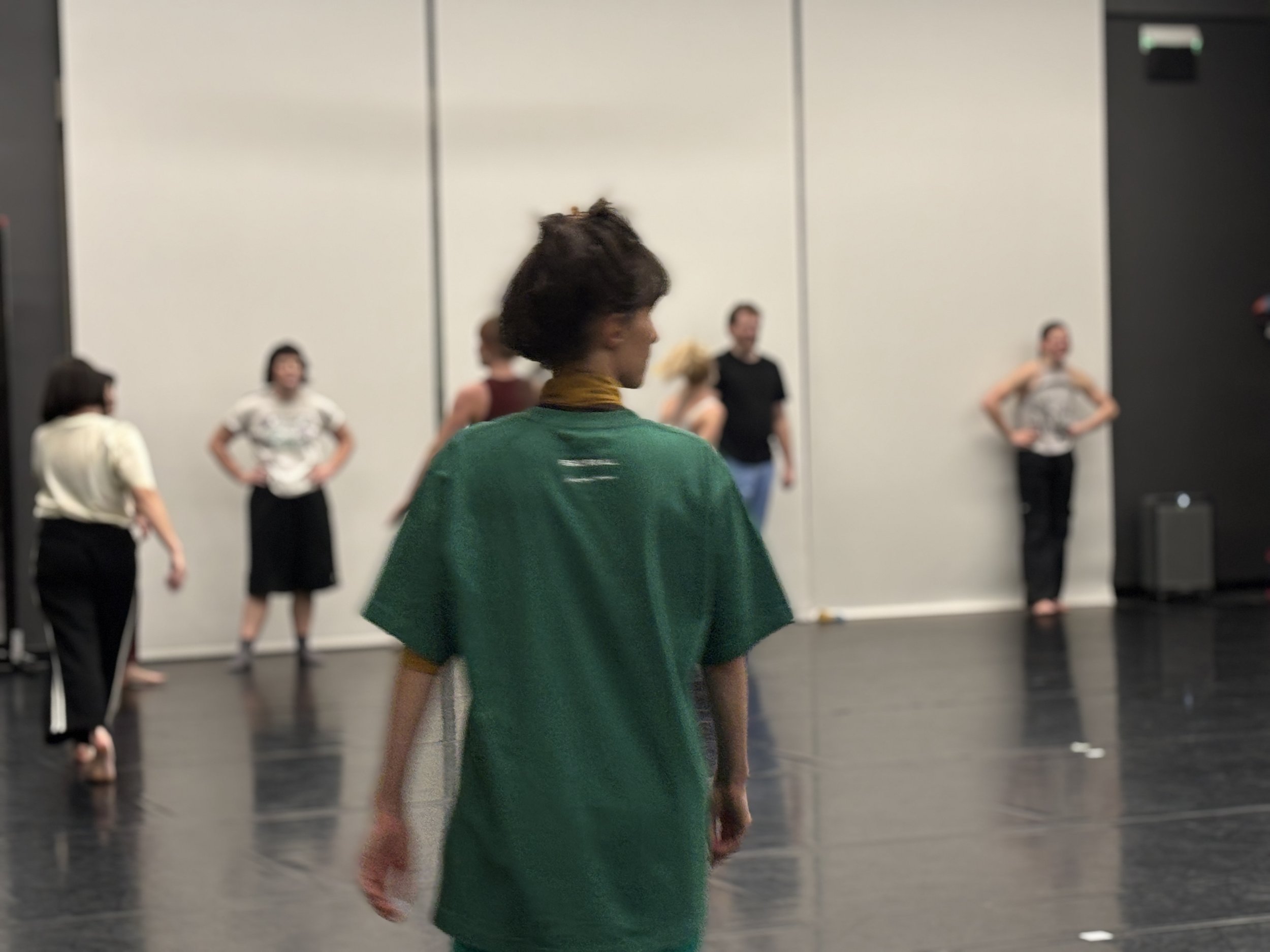
A few people left the organizing team, a few people joined, everyone got to decide for themselves what jobs they were interested in and how much time they were willing to give, including when that meant giving none. We kept things light with each other, cultivated transparent feedback processes with our community, and let people help us when we needed it. We all accepted payment in the form of joy, freedom, and sweat twice a week, Mondays and Thursdays from 6:30-8pm and somehow, we kept it all going.
The color for season five was chartreuse.
This time we got $5,000 from the Salt Lake City Arts Council. We decided to up the base teacher pay from $20 to $40 per class so we could bring in higher demand teachers and start to pay our class hosts to honor their necessary labor (these are the people who care for the space, take videos during class, and make sure everyone fills out the right paperwork). Classes were growing. We were the most affordable option for adult contemporary classes around, our teachers were nominated by the community to offer exactly what people wanted, and we had FUN. Samuel Hanson reached out and it turned out DCFH aligned with a huge part of loveDANCEmore’s educational mission. We had successfully established an advanced level class series that served the independent dance community better than any other classes in the city. There was some room in their budget to offer us partial funding. Suddenly our organizing team was able to pay ourselves – not a lot but enough to bring some buoyancy to the extra work all this growth was asking for. A mutually beneficial exchange for all of us.
The color for season six was aquamarine.
I taught class again – this time using it as a chance to develop improvisational scores exploring what it means to feel “togetherness” when individuals are given a lot of freedom to make their own choices. Cuts to the NEA trickled down and the Project Grant we were planning to apply for through the Utah Division of Arts and Museums disappeared… suddenly the SLCAC Project Grant became a lot more competitive. I began to wonder how we would maintain this exciting new growth once our grant ran out. DEXO didn’t have any money from their budget to offer us, and I started doing research into other grants we could apply for without becoming a non-profit ourselves. Sam Stone left Salt Lake City for a teaching position in North Carolina… there were five of us now and we got to learn if our decentralized approach to organizing would work without its original Ringleader...
The color for season seven was amber.
As I was talking with Samuel Hanson about the details of a fiscal sponsorship with loveDANCEmore to qualify for new grants, he proposed a new option. If DCFH became a program of loveDANCEmore they could offer funding to cover our whole budget… but not until January 2025. Our grant ran out in August. We had a choice and unanimously voted not to pay ourselves for the administrative work of the summer season and instead put the money towards teacher and host stipends for the fall season to keep classes going without a break. We got 12 more weeks of laughing, sweating, and dancing with our community.
The color for season eight was lavender.
Sam Stone, Meagan Bertelsen, Carly Shuab, Meghan Wall, Samuel Hanson, Halie Bahr, and I spent hours on Zoom calls over the next several months figuring out the organizational tangle between DEXO, loveDANCEmore, and Westminster University and how DCFH could fit into this new place in a way that supported and benefited everybody in our small dance ecosystem. When the dust settled, we had steady funding for the next year of classes, reliable space donated by Westminster, and a sense that the way we were doing things was really going to work.
The color for season nine was maroon.
We met in Kam’s house in December for a craft night to celebrate Grace’s birthday. Casually splayed out across the bedroom, our organizing team, surrounded by other friends in the dancing community, dissected the teacher line-up for the next season trying to figure out how to get all of our favorite people on the schedule, offer opportunities to new teachers, and incorporate a new monthly Underscore practice into our programming facilitated by Brandin Steffensen.
Our meetings are always like this, filled with laughter, surrounded by food, going on tangents late into the night. We’ve learned that when the money isn’t there you have to at least have fun and that there are many forms of generosity beyond the passing of bills. We’ve kept a decentralized structure with no director positions, instead we are the Comm Queen, Head Host Honcho, Money Mama, and Promotional Princesses and it turns out you make better decisions when they’re made together. Our classes continue to run on gift and while people can’t always give a lot, we have figured out ways to make it enough. We’ve learned that the dance world here is small, but not too small, and that the more connections we build the stronger we all grow. So why are we still organizing this even though we still can’t pay ourselves enough for the hours we put in? Why do people keep coming back to class, and why do new teachers keep joining us? – I’ve started to think it’s the sense of “togetherness” that emerges when you are rooted firmly in communal generosity, individual autonomy, organizational transparency, and authentic joy.
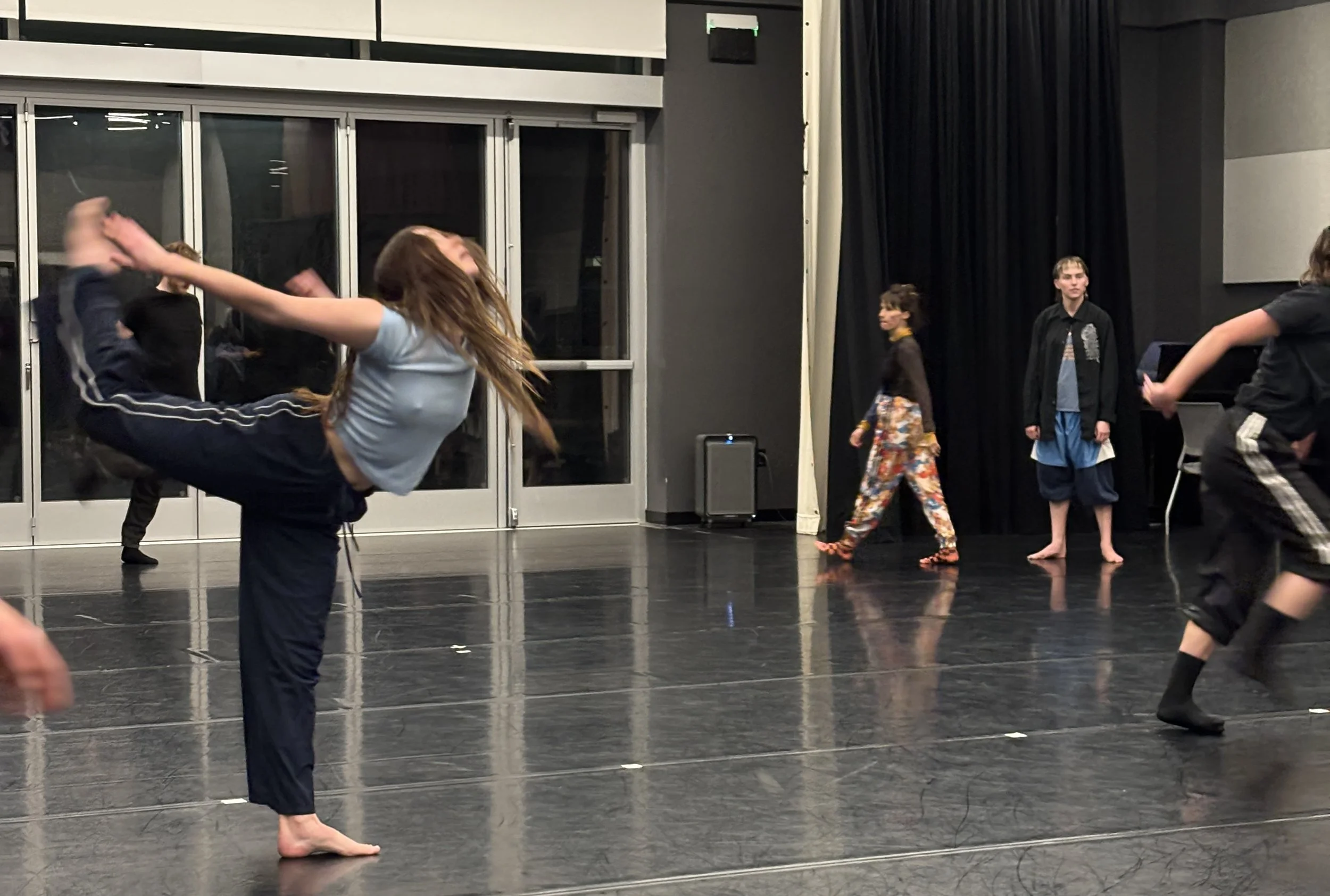
The color for season ten was nasty orange.
We had more teachers than we’ve ever had in one season, we started a new partnership with Ririe-Woodbury Dance Company to connect their guest artists to our community, and hit a record number of 34 classes in one season. We surpassed our expected donation amounts and paid ourselves more than we ever have: $11 an hour! This is the second season in a row we have had over 100 individuals attend our classes, over half of which come back for more than one class. These statistics are more than just numbers, they reflect that we’ve created something that truly nourishes the independent artists in our community. The questions haven’t ended but we are starting to find our own answers.
How do we make sure we don’t burn out?
By knowing when it’s okay to do less and creating structures for funds to flow back to the organizing labor.
Why are we doing this if it isn’t making anyone any money?
Because what it can’t pay in money it makes up for in connection.
How do we balance this with the demands of work that does financially support us?
We let it be flexible and share the load.
How do we respond to concerns raised by the community?
Direct phone calls, group chats, and doing things differently next time.
How do we best meet the interests and desires of our community?
Asking them and letting them be a part of every process.
How do we expand our community – is that worth the work?
Invite in new movement practices - it’s always worth it to see more new faces in the room.
How do we take care of each other while we do this?
Share food, massages, and keep dancing.
The color for season eleven is… dusty purple
New merch is coming soon to celebrate three years of DCFH - all funds will help sustain and grow our administrative funds. Free sticker with any donation over $50! See you in class!
Kara Komarnitsky is an interdisciplinary artist currently making work in Salt Lake City. She received a BFA in Dance from Ohio State University and since then has performed with Myriad Dance Company, Fem Dance Company, and Repertory Dance Theatre amongst many community shows; presented work with Illuminate Salt Lake Festival, Utah Dance Film Festival, Queer Spectra Arts Festival, 801 Salon, Red Rock Dance Festival, and RDT’s LINK series; and continues to seek out new avenues of cultivating wonder in her communities.
Dance Class for Humans continues to build a sustainable infrastructure for dance classes in Salt Lake City! They were recently featured in The Salt Lake Tribune, and loveDANCEmore is so thrilled support their journey and collaborate for years to come.
Read all about their progress and the feature here.