Utah Presents welcomed another world-renowned professional dance company Cloud Gate Dance Theatre of Taiwan to perform for the first time in Utah this November 17. It was a privilege to witness this performance.
Cloud Gate performed two works for the evening: Blue Hour and Beckoning, both choreographed by the company’s Artistic Director, Cheng Tsung-lung.
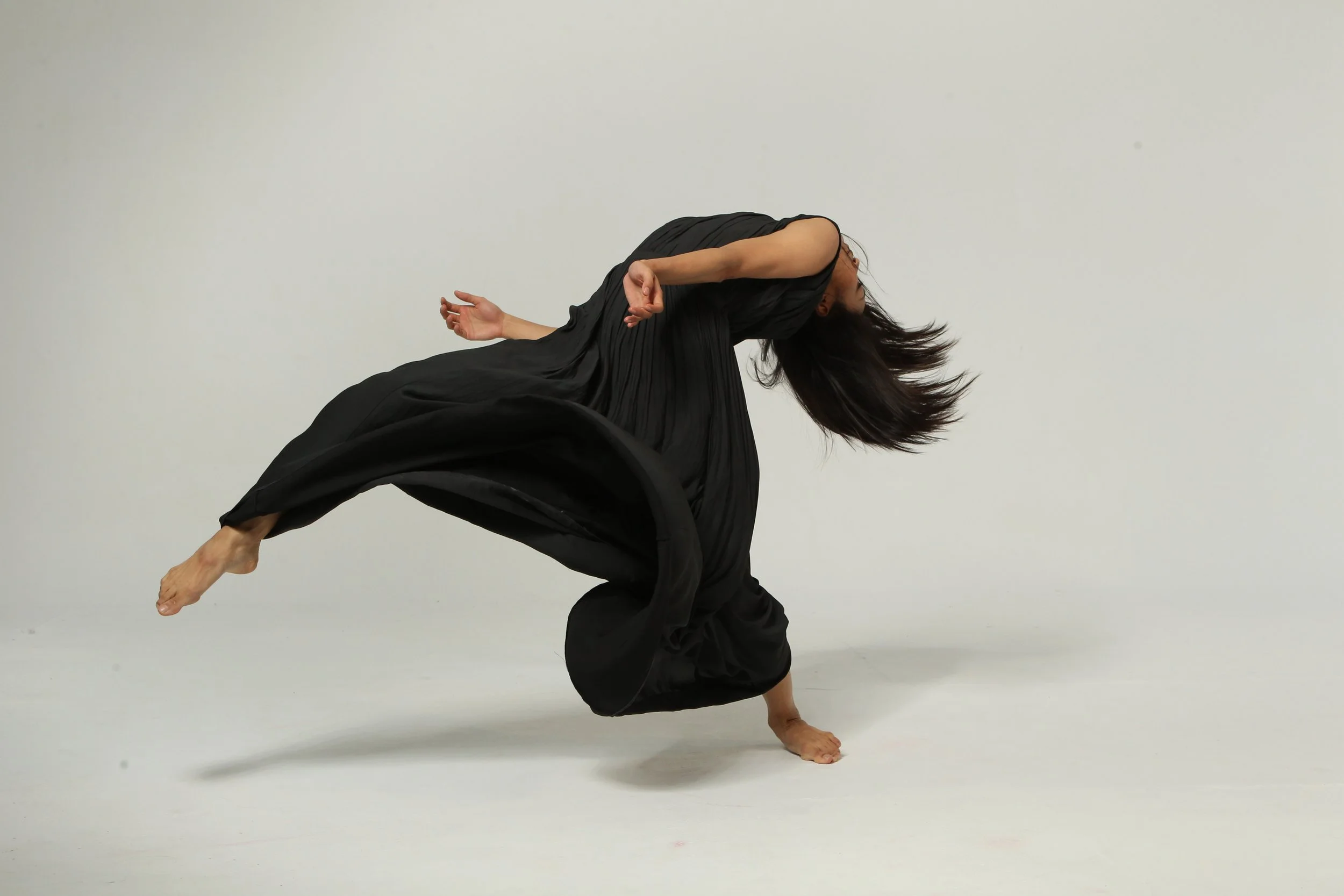
Blue Hour opens with a gathering of six female figures who seem to hum in the dark space. I can feel their quiet strength amidst minute, detailed energetic shifts and meditative movements. While yes, their performance feels strong, it is also elegant. Arms and hands waft through the air in wave-like motion and with incredible specificity. The lower body often moving in complete opposition to the upper, with stomping of feet and travel through space as the dance opens up to fill the stage.
The dancers move in and out of solo material and absolute perfect unison. It was obvious how much effort went to moving together as one, perfecting the details in unison. In these moments, combined with the choice to dance the majority of this work in silence, the sound of hair, arms, and the black dresses slicing through space created the soundtrack. This created a deeper, inner focus as the viewer. And I questioned how often I simply get to sit with a movement, feel the beat of my own heart, and hear the rhythm of my breath.
Following a brief intermission, the evening closed with Beckoning, which first premiered in 2015.
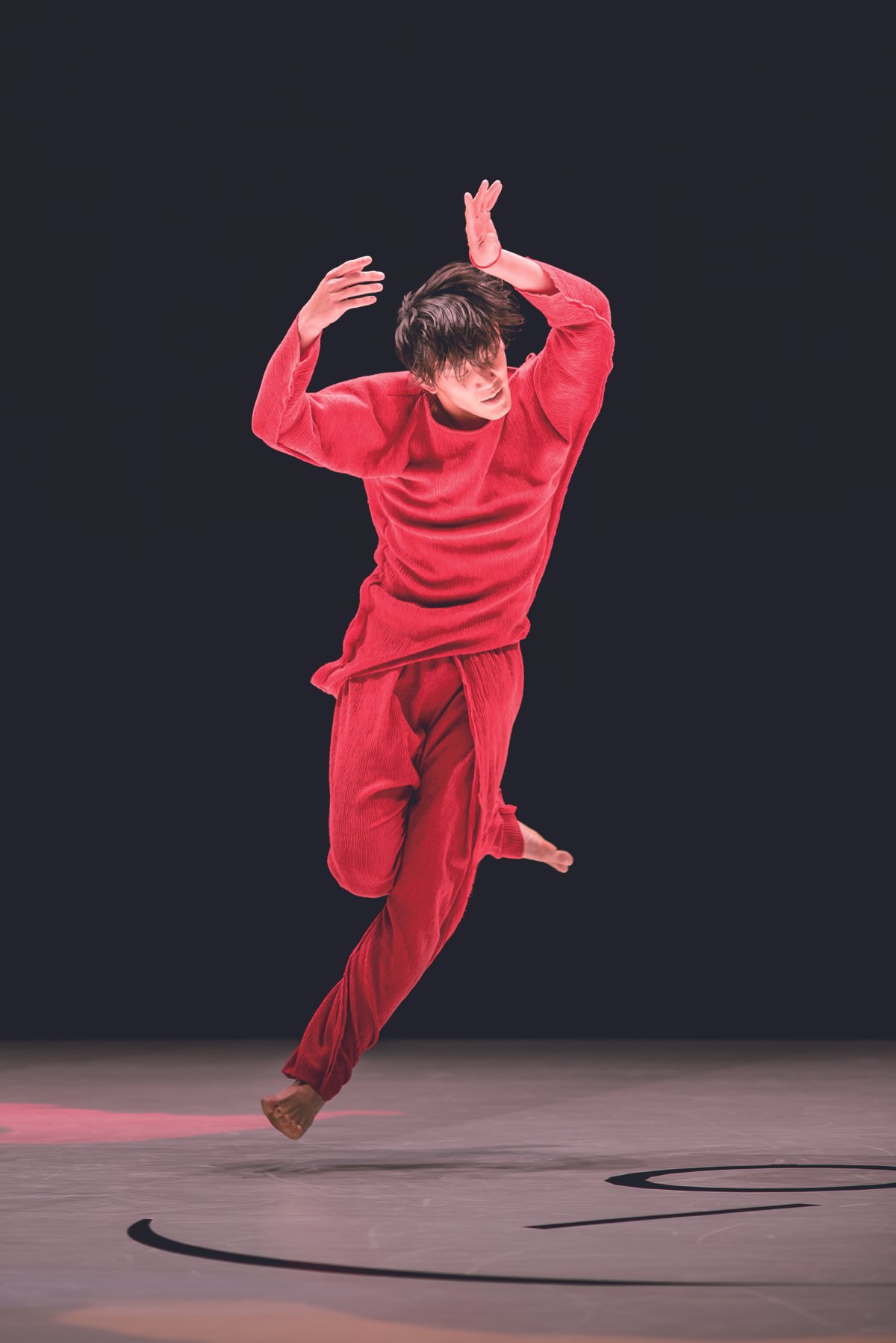
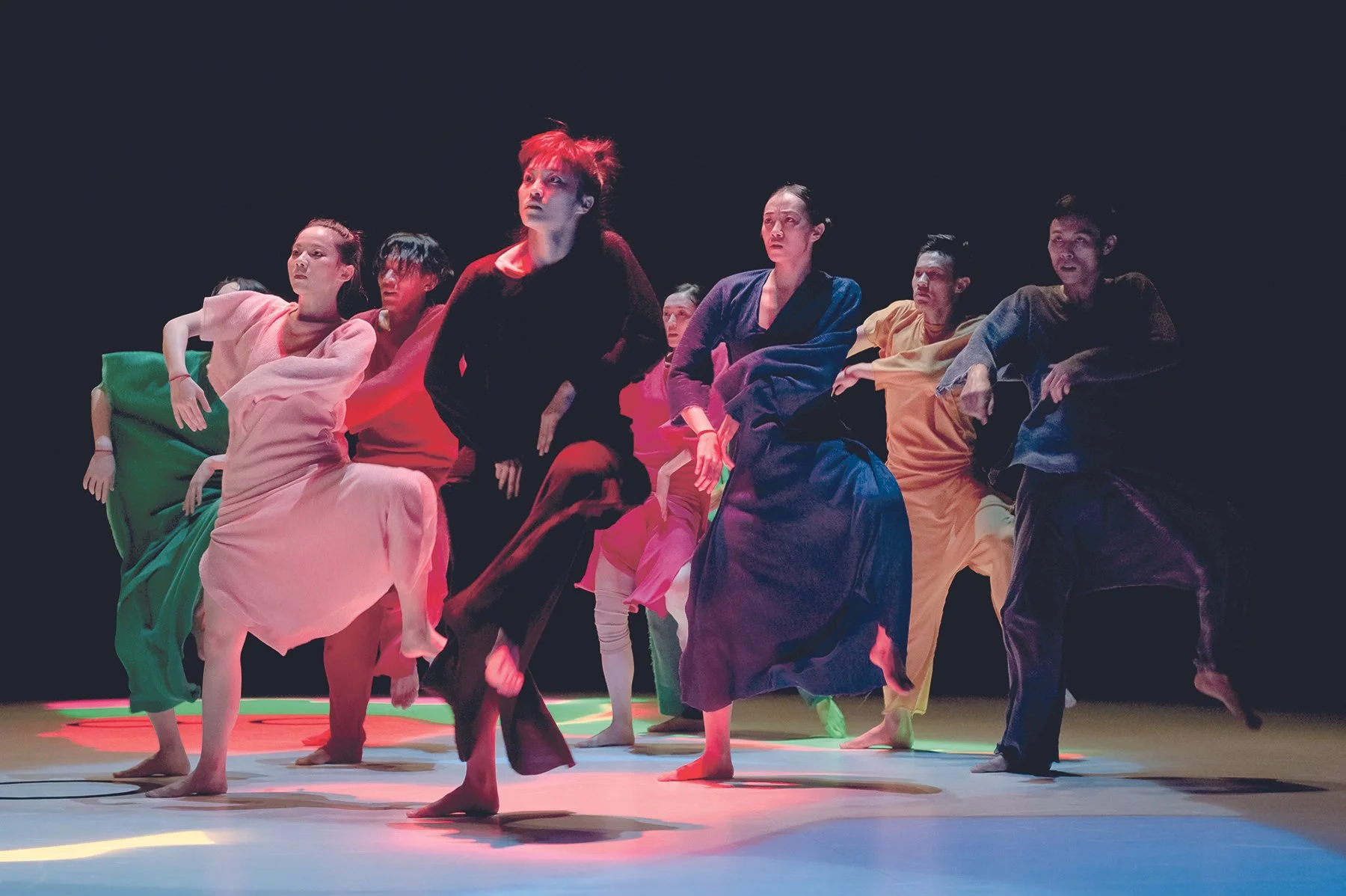
The piece opens with a soloist center stage, articulating his spine in slow, sequential movements under a red pool of light. It felt like a metaphor for re-birth. This element of spinal movements continued throughout the work. As more dancers began to accumulate on the stage, the wave of the spine and upper body became a clear motif. The repetition of a wave-like movement made me see the work as an example of how human beings can choose to move through the chaos of life by surrendering to the ebb and flow. We can allow ourselves to rest in the unknowns.
Within both works, I certainly noticed an Eastern perspective combined with contemporary dance. Cheng Tsung-lung notes his pairing of Taiwanese ancient rituals and modern life into his creative work. The two dances presented by Kingsbury Hall are specifically featured as Cheng’s transition from a choreographic language that prioritizes quiet self-reflection to movement inspired by Taiwanese temple processions.
Both works also made me desire the duration of highly physical movement. I wanted this physicality to go on a bit longer. However, I feel that this decision would be in opposition to the style and aesthetic of Cheng’s work, the influences he brings as a Taiwanese artist. As noted, a quiet reflection is important, especially in the period of his career that both works were created.
This is one exciting aspect of dance! Choreography is timely. It is crafted in specific moments in time in a person’s life. Where they are, who they are, their personal history, and what they’ve been through. All of which massively shapes and constructs the their work. The dances created are an archive of our life. They tell our story.
Photos provided by Utah Presents
Kara Robertson is a Choreographer, Director, and Writer based in Salt Lake City. She holds an MFA in Modern Dance from the University of Utah. She founded and served as Artistic Director of Karar Dance Company, a 501(c)3 nonprofit professional contemporary dance company, for seven years. She is a 2024 Virginia Commission for the Arts Choreographic Fellow. Her work has been performed throughout the country including at the John F. Kennedy Center for the Performing Arts and at the Ailey Citigroup Theater and Gibney Dance. Kara holds a Bachelor of Fine Arts in Dance and Choreography from Virginia Commonwealth University. When not in the studio or attending performances, you will find Kara working in development, raising funds for programs at the Marriott Library at the University of Utah. Find her at kararchoreo.com and on Instagram @kararchoreo.