
I sat down with choreographer and interdisciplinary artist Stephanie García to talk about her creative process, collaboration, and the questions shaping her new work, What Have We Lost? García speaks about a practice grounded in inquiry, where meaning develops gradually through the process of making. Our conversation touches on injustice, migration, ecocide, and embodiment, while staying closely tied to the practical realities of creating work with others. What Have We Lost? is presented by Utah Presents’ Stage Door Series and runs February 12–14, 2026. Link to tickets here.

Mitsu: Hi Stephanie, thank you so much for taking the time to meet. I am a fan of the work I have seen of yours and would love to hear more about this new work, What Have We Lost, that will be this February at Utah Presents. What are some themes of this work and how does it connect to your previous work?
Stephanie: We started working last October in the studio with dancers, and it was a little blurry for me. The beginning is always hard. But after the last few weeks and having that break, things started to settle. I realized it is still very personal and very connected to my interests, which have always been about human behavior and the human condition.
I am still trying to understand why we cannot find ways to co-exist as a human race. It is not just about daily life, but also about more complex systems of power. We have the ability to reason and solve complex problems, and yet we are always in conflict with violent dynamics.
My work in general deals with social issues and injustices. At different times, the focus shifts. During graduate school, I was very focused on gender violence and discrimination. Now this piece came from seeing how irresponsible we are with the environment and natural destruction. But it also connects to other things. It keeps returning to the question of what are we doing?

Photo by Emily Muñoz
I think about the future and future generations. Through this work I am thinking about how environmental justice connects to other social issues like inequality and discrimination. The piece started with the concern of the destruction of the natural world, but it has become about other issues as well.
Mitsu: So your work often deals with injustice and this question of why humans cannot figure things out. You allow the work to evolve. How do you usually begin?
Stephanie: At first I work alone. I gather, read, collect images, make collages. I have a digital journal. Sometimes I share that with Peter Hay, my collaborator. In this particular project, What Have We Lost?, there is a continuous conceptual dialogue between Peter and myself. Peter has been a key in both witnessing and developing the content of the work. We talk a lot and his feedback is very helpful at this initial stage. Once I have ideas for structure, like a skeleton of the piece, I bring them into the studio and test them with the dancers.
My work is based in movement, but it is also about how I craft the piece as a whole. Pieces that are only [the medium of] dance are harder for me. I feel I need other elements because they help communicate ideas that are complex and difficult to express only through the body.
When starting a new process, I get nervous, especially with new people. In Mexico, I worked with a group where we already knew each other. Here I had to start again, find people who trust each other and build that relationship. With Peter it feels easier because we already know each other very well. But with dancers, especially when everyone is new, you never know how it will go.
Mitsu This upcoming piece is a collaboration with Peter Hay. Tell me more about your collaboration together?
Stephanie: Peter is a visual artist. What I like is that he is not from the performing arts world, so he sees things differently. He brings me back to earth. He helps me understand what an audience might read. I think I am communicating everything clearly, but he helps me see what is missing or out of context.
For this piece, he is making installation work. There is negotiation between ideas and technical possibilities. Sometimes he proposes something and I doubt it, but once it passes through the theater and technical team, I can see it can be very powerful.
Sometimes collaboration is chaotic. We still disagree and misunderstand each other, sometimes because of language. But it is part of the process and it keeps the work alive.
Mitsu: Your work is interdisciplinary. Movement is important, but not the only element. How do you decide what leads?
Stephanie I do not always know. It is very intuitive.
I care about the quality of movement, but sometimes objects create the image first. Bodies are powerful, and when you add something around them, meaning appears. It changes how people look and engage.
A lot of the process is playing, trying things, simplifying. Sometimes we move toward more text, sometimes more movement, sometimes just actions. It is still dance, but from another angle.
Something important for me is that the process should be enjoyable. I have had processes in the past where it became unhealthy, and I do not want that. Even with serious topics, the studio should still feel playful and human.
I also wish we had longer processes, but economically it is hard. That forces you to be efficient. Collaboration is fundamental because instead of one brain, you have many brains offering ideas and solutions.
Mitsu: You mentioned being drawn to movement that does not look like what we are used to seeing.
Stephanie: A lot of contemporary training comes from ballet foundations. Even when it changes, you still see that lineage. I was trained in those languages too.
It is not that I reject that tradition, but I am not interested in seeing the same movement language repeated over and over. Changing costumes while keeping the same steps does not feel meaningful to me.
This also happens in contemporary dance. In the US, the modern tradition is still strong. In Mexico it broke earlier, but we received influence through release and floorwork, which I love and teach. But even those can become repetitive if they are not connected to meaning.
I am more interested in organic movement. Softness, but not weak. Strength, dynamics. I am especially drawn to the spine and its adaptability. I struggle with rigid lines unless they are intentional. I prefer movement that feels responsive and alive. But that is just taste.
Mitsu How did you begin dancing?
Stephanie: It was by accident. My mom passed by the National Arts Center and picked up a pamphlet for the national dance school. She brought it home and asked if I was interested. I did not know what contemporary dance was, but I auditioned. About 300 people auditioned and they accepted 14. I got in. I had no dance background, but I was a gymnast. My mom had been a gymnast and coach, so I trained with her growing up. That helped physically for my audition.
The school included both academics and dance training. The first year I did not understand much. By the second year I discovered I really loved it. By the end of my third year, I began dancing professionally.
Mitsu: You lived in Mexico City until moving to the US?
Stephanie: Yes, my whole life.
I danced with companies, but I always wanted to explore different styles. In Mexico you could clearly identify each company’s language. I was excited by that diversity.
Later I began making my own work. I was invited to tour solo work through UNAM’s cultural program. Then I co-founded a multidisciplinary company with collaborators from theater, dance, and visual art. That is where my interdisciplinary approach grew.
I was also influenced by Mexican theater directors who rework classical texts in radical ways. Seeing that work shaped how I think about form.
Mitsu: How did you end up visiting and eventually living in the US?
Salmon: First through my work in arts administration, and after because of Peter. I became interested in how presenters work, how touring happens, how opportunities are structured. The performing arts company I co-founded was also a nonprofit in Mexico City and I handled grants, applications, and touring for about ten years.
Through that, I met presenters from the US. I was invited to a conference in Tulsa, Oklahoma, where Peter was working. That is where we met. Later my work was presented at Living Arts. That was my first time presenting work outside Mexico.
Eventually I came to the US for my master’s degree.
Mitsu: How does Salt Lake compare to Mexico City?
Stephanie: Lifestyle is very different. In Mexico City, you commute constantly. You leave early, you carry everything, you do not go home between things. Here, you can go home, eat, rest. That makes a big difference.
Pedagogy is also different. In Mexico, teaching used to be very hierarchical. Here, consent and dialogue are more present. That has changed how I teach and direct my work.
The community here feels small but supportive. Conditions are still difficult, but relationships feel more honest.
Mitsu: Does place influence your work?
Stephanie: Yes, I would not have created certain pieces if I had not lived here, especially those related to migration. You cannot truly understand migration until you experience it. The migrant experience is universal, yet deeply personal. It is experienced in much the same way by any migrant, regardless of their legal status, encompassing themes such as displacement trauma, cultural adjustment, and a sense of loss. This experience is multilayered and becomes even more complex depending on the levels of privilege one has when relocating.
The landscape also affects me. The mountains, the lake, the snow. It deepens my thinking about impermanence and nature. That enters the work naturally.
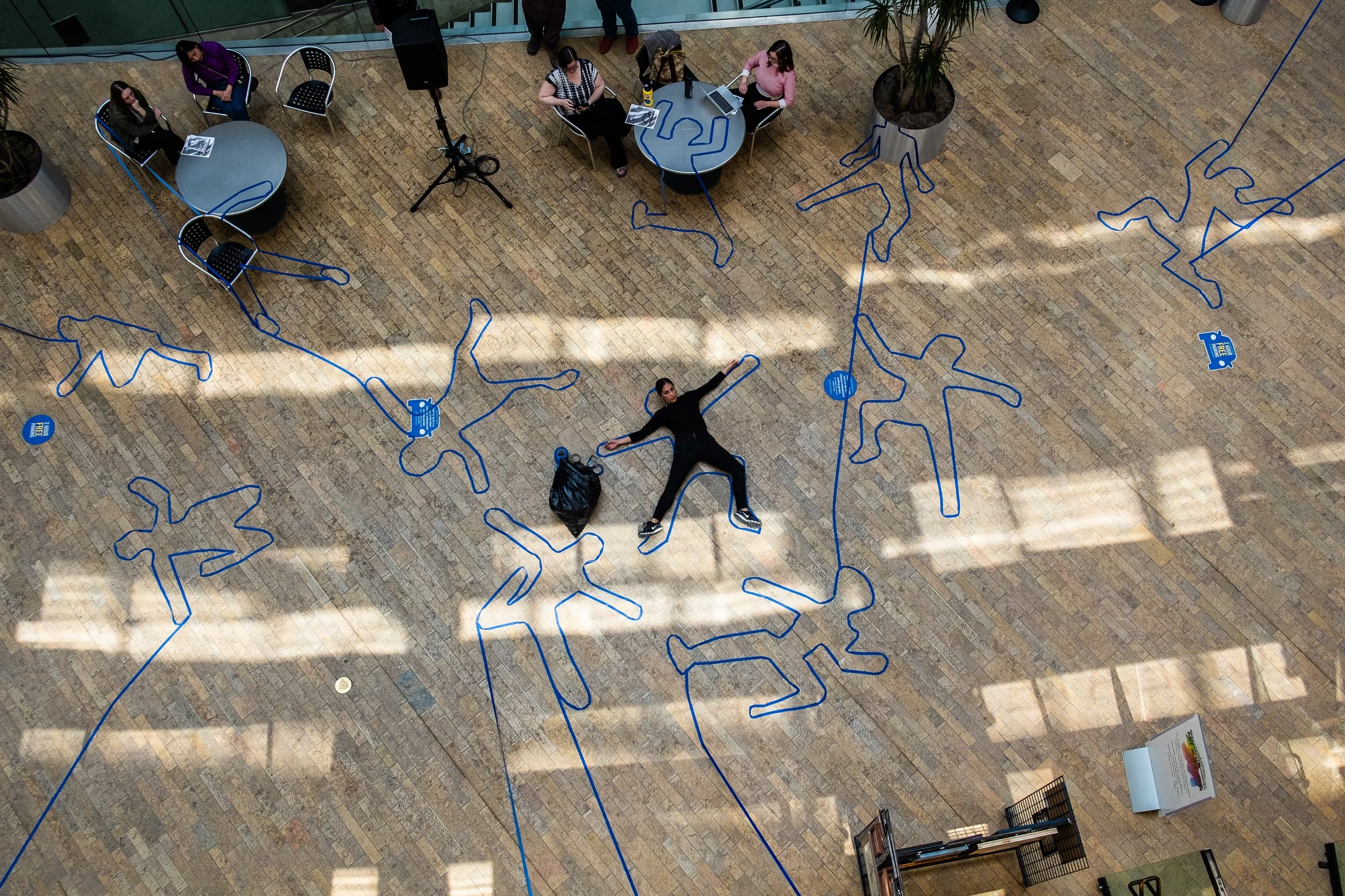
Photo by Winston Inoway
Mitsu: Is there anything risky or unresolved in the upcoming work What Have We Lost?
Artist: Yes. The piece is immersive but not participatory. The audience moves through the space, but we will not ask them to perform. That boundary feels important.
The risk is timing. We will not know how audience movement and reactions will affect the pacing until people are there.
Also, performers working with spoken text is always challenging as conventional dance training often treats voice as a foreign tool detached from the body. Working with all these elements is exciting.
Mitsu: What feels most essential in this current piece What Have We Lost?
Stephanie: I believe our ability to connect is crucial. What makes this process feel personal to me is that I am sharing my deeply held concerns with my collaborators. While our experiences may differ, we all have the capacity to recognize our blind spots and understand different perspectives. This allows us to realize that we have more in common than we might think.
From an ecological perspective, when the world collapses, I have been thinking that the natural world will survive. What is at stake is us, humans.
Documentaries about evolution and readings about anthropology have been important resources for this piece. Humans are adaptable, but extinction will happen eventually. That is part of life.
So the piece asks if all this conflict is worth it, when we could change how we live? I do not think art changes the world on a large scale. What this process has selfishly provided me with is a sense of peace. It has helped me reconnect with a survival strategy that emphasizes pragmatic thinking. This way, I can maintain a sense of hope and still appreciate the beauty amidst the chaos, especially as a Mexican immigrant living in this country right now.
Some parts of the piece are poetic, some are literal. The audience will interpret what they will.
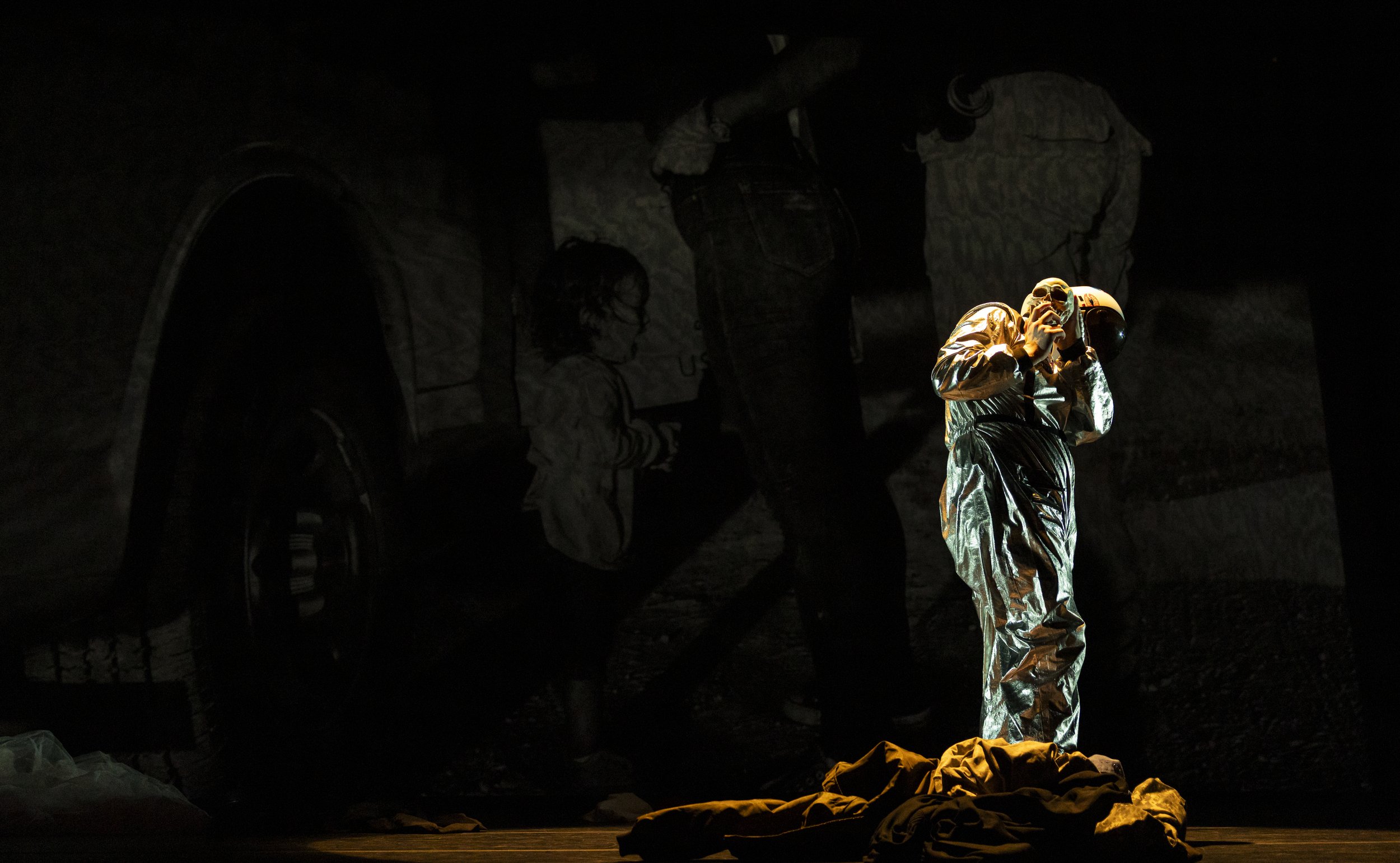
Photo by Emily Muñoz
What Have We Lost? is presented by Utah Presents Stage Door Series and opens February 12 - 14, 2026. This interdisciplinary performance, created and dramaturged by Stephanie García & Peter Hay, explores humanity's current condition and reflects on what remains in the aftermath of catastrophe. It features movement artists Leslie Jara, Fausto Rivera, and Kellie St.Pierre. Link to tickets here.
This programming is funded by loveDANCEmore as part of our in-house writer series, where we have in-depth conversations with artists to get to larger contexts about their work. If you would like to support this programming in the future, please consider making a donation or join our monthly subscription here.
Stephanie García is a multi-awarded Mexican dance-maker, movement artist, performer, producer, arts administrator, arts advocate, and independent curator working in the USA and Mexico. She is co-founder and co-director of Punto de Inflexión Project and PROArtes México, and is a loveDANCEmore artist-in-residence. Last April, Stephanie was appointed to the 100th class of Guggenheim Fellows in the field of Choreography. She has collaborated with renowned Mexican and international choreographers, performed at prestigious dance festivals and venues in Mexico and 11 countries across America, Europe, and Africa, and created over 30 original interdisciplinary pieces presented in the USA, Mexico, Cyprus, Ireland, Peru, Panama, Spain, and Cuba. Her work has received grants and funds from Mexican, USA, Ibero-American, Dutch, and Canadian institutions.
Mitsu Salmon is an interdisciplinary artist and writer based in Salt Lake City, working across performance, sound, and visual installation. Her practice explores translation across media, culture, and personal narrative.
Her writing has appeared in Dance Chronicle and loveDancemore, and she received the Dance Chronicle Book Review Award. She has self-published artist books including Resonates, Traces, Orchid, and Feathered Tides. She holds an MFA from the School of the Art Institute of Chicago and a BFA from NYU. She has presented work at institutions including the Museum of Contemporary Art Chicago and the Chicago Cultural Center. Her work in Utah has been supported by the Utah Performing Arts Fellowship and grants from Salt Lake City.